

Quantum Leap: Quantum Cryptography Patent & Pending Application Holders

By Ayana Marshall, Ph.D, Patent Data Analyst

Quantum cryptography is advancing rapidly due to the imminent threat posed by quantum computing to traditional cryptographic methods. Significant progress in both quantum computing capabilities and the development of quantum-resistant cryptographic algorithms is driving this advancement1-6. The potential for quantum computers to break current encryption systems such as Rivest-Shamir-Adleman (RSA) and Elliptic Curve Cryptography (ECC) is a major driving force behind the urgency to develop quantum-resistant cryptography1-6. Various technology companies and academic institutions are actively innovating and protecting their advancements through patent filings. This chart showcases the organizations that are shaping the future of secure communication in an era where quantum computers present both unprecedented opportunities and significant challenges.
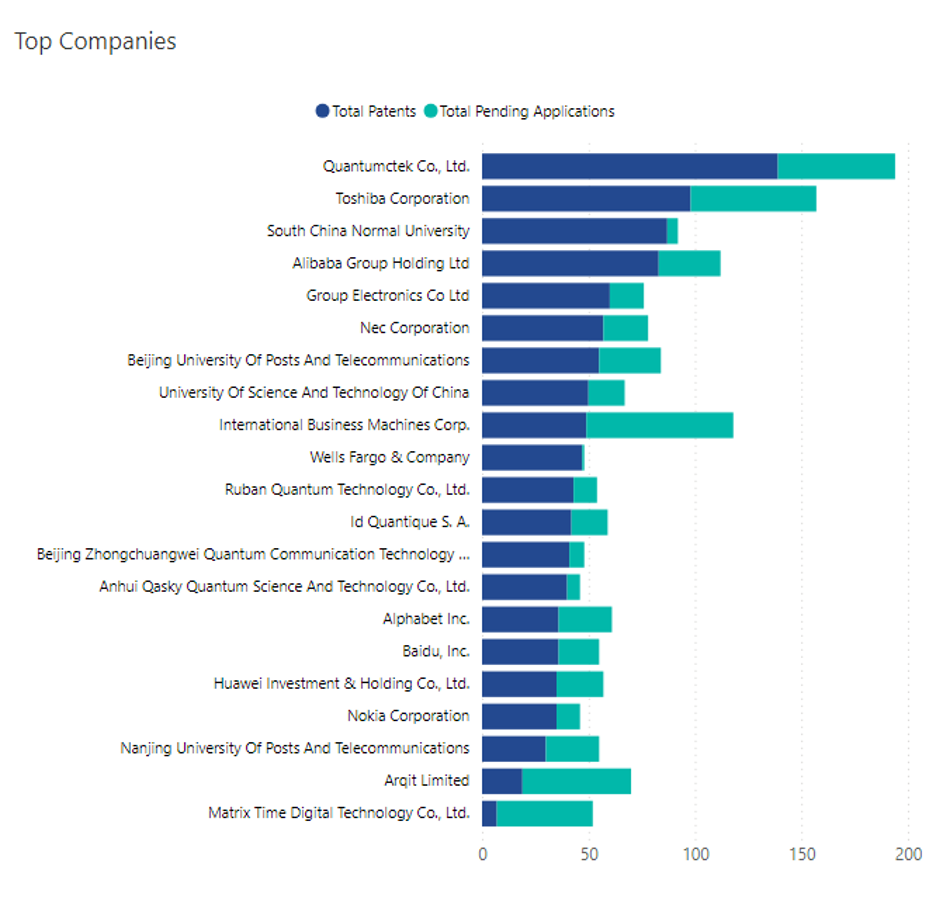
  • Quantumctek Co., Ltd.: Leading with several patents and pending applications.
  • Toshiba Corporation, South China Normal University, and Alibaba Group Holding Ltd: Each displays similar patent activity to each other.
  • Group Electronics Co Ltd and NEC Corporation: Round out the top 6 both with similar quantities of patents and pending applications.
  • University of Science and Technology of China and IBM: Represents the involvement of academic institutions and corporate entities in the field.
  • Huawei and Baidu: Displays corporate giants that are actively participating.

QuantumCTek In the News

Transitioning from a broader look at the top companies in quantum cryptography, the focus now shifts to QuantumCTek Co., Ltd., the leader in patents and pending applications. The following are some of their recent innovations and received investments:

  • They have developed a ruthenium oxide thermometer that is used for tracking the temperature of quantum chips which allows for quantum computer stability and accuracy​7​.
  • They received a 504-qubit superconducting quantum computing chip named “Xiaohong,” aimed at advancing quantum computing measurement and control systems​8​.
  • China Telecom Quantum Information Technology Group Co., Ltd. has invested approximately 1.9 billion yuan to acquire a 23% stake in QuantumCTek​9​.

Quantum Cryptography Patents on the Rise: A Publication Trend Analysis
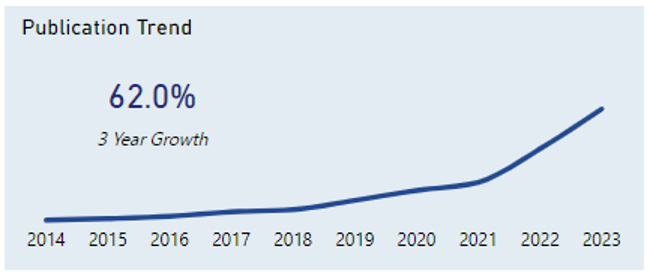
  • Upward Trend: The publication trend in quantum cryptography publications has shown a significant upward trajectory, as illustrated in the above chart.
  • Growth in Publications: The three-year growth indicates a 62% increase in quantum cryptography publications. This trend underscores the increasing focus on quantum cryptography, driven by advancements in quantum computing and the pressing need for secure communication methods.
  • Recent Growth: Also displayed is the transition from minimal publication in quantum cryptography from 2014 to 2018 to an incline 2019 and onward.


Driving Innovation and Security: The Rise of Quantum Cryptography Publications

The surge in quantum cryptography publications highlights the critical importance of this technology, which is developing methods aimed towards ensuring secure communications and protecting against future quantum threats. It is crucial for protecting critical infrastructures such as financial systems, healthcare, and national security networks, which rely on robust encryption to defend against sophisticated cyber threats. As the data indicates, companies like QuantumCTek are at the forefront of this field, actively securing their innovations through patenting. Overall, the growing number of patents and pending applications underscores the importance and potential commercial viability of quantum cryptography, reflecting a global push to harness and protect intellectual property in this pivotal technology sector.

This data is sourced from the Harrity Analytics Patent Pulse™ Report on Artificial Intelligence.  For more information about the Patent Pulse™ Report visit our website HERE, download a complimentary Patent Pulse Report HERE, or contact Harrity Analytics HERE. 

References:

  1. Post-Quantum Cryptography
  2. Quantum Cryptography
  3. World Economic Forum
  4. VIPRE
  5. ar5iv​​
  6. Newsroom
  7. com
  8. The Quantum Insider
  9. MarketScreener


Redefining Networking: Embracing New Avenues for Professional Connections

In today’s fast-paced professional world, networking and building relationships have dramatically evolved. Gone are the days when business connections were forged exclusively on the golf course or over formal meetings. Women professionals are now redefining networking by embracing activities that promote well-being, creativity, and genuine connections. This shift not only enhances professional relationships but also contributes to personal growth and a sense of community.

Elaine Spector recently shared an inspiring example that underscores this shift. Elaine came across a LinkedIn post about a group of women practicing yoga together, highlighting an innovative approach to networking. This simple yet powerful activity has sparked a broader discussion about incorporating wellness into professional networking routines. Combining yoga with networking represents a refreshing departure from traditional methods, showcasing how women are finding new and meaningful ways to connect.

Networking through yoga is just one example of the creative avenues available today. Whether through lunch dates, shopping sprees, or running groups, the possibilities are endless. These activities not only offer professional connection opportunities but also promote a healthier, more balanced lifestyle.

Reflecting on the past, Elaine recounted how she once took golf lessons over 25 years ago to fit into the then-popular networking activity. Despite becoming quite skilled, her experience underscored the limited options available at that time for building professional relationships.

Today, professionals are fortunate to have a wide array of choices that allow them to tailor their networking efforts to their personal interests and lifestyles. This shift empowers individuals to form deeper, more meaningful connections based on shared experiences and passions.

Elaine encourages others to share their favorite unconventional networking activities. The excitement of discovering new ways to connect and build relationships is palpable. Whether it’s a shared hobby, a wellness activity, or something entirely unique, finding what resonates and strengthens professional bonds is key. Embracing and celebrating the diverse ways to support each other professionally and personally is crucial.

Networking has evolved from rigid, traditional activities to more dynamic and personalized experiences. By embracing activities like yoga, running, and other interest-based gatherings, women are not only building stronger professional networks but also fostering a sense of community and well-being. As new ways to connect are explored, it’s important to celebrate the diversity of networking approaches and the enriched relationships they bring. Sharing favorite networking activities can inspire others to think outside the box in their professional journeys.

We encourage all professionals to embrace these innovative networking methods. By coming together, we can drive meaningful change and foster a more inclusive and connected professional environment.

Want more Driving Diversity? Check out other videos with Elaine Spector here!

How to Address Broken Promises at Work: A Constructive Approach

Welcome back to our weekly dive into workplace wisdom with #DearSandy. Each week, we explore the complexities of office dynamics and discover practical advice for some of the most challenging situations.

In the professional world, it’s not uncommon to encounter challenges that test our patience and resilience. One such challenge is dealing with unfulfilled promises from your boss. These unmet expectations can erode trust and dampen motivation, making it crucial to address the issue constructively. In this week’s “Dear Sandy,” we tackle the delicate matter of handling broken promises at work to foster a stronger, more cohesive team environment.

Dear Sandy,

I’m facing a challenging situation at work and I hope you can provide me some advice. My boss has repeatedly made promises to me regarding various aspects of my job, like project opportunities. However, these promises have not been fulfilled, and it’s starting to impact my motivation and trust in my leadership. I truly want to address this issue constructively because I believe in our team’s potential and want us to succeed together. How can I approach my boss about these broken promises in a way that is professional and conducive to building a stronger team?

Frustrated Team Player


Dear Frustrated Team Player,

It sounds like you’re in a difficult position, but your desire to resolve this constructively is the right approach to fostering a better working environment.

Firstly, it’s important to prepare for this conversation by gathering specific instances where project opportunities were discussed but did not materialize. This isn’t to keep score, but to clearly illustrate your concerns. When you speak to your boss, request a private meeting at a time when neither of you are rushed or stressed.

Begin the conversation with appreciation and positive intentions. For example, you might start with, “I really value your leadership and our team’s goals, and I want to discuss something important to ensure we can continue to work effectively together.” This sets a collaborative tone.

Present your observations factually and express how the situation makes you feel, without sounding accusatory. Use “I” statements, such as, “I feel concerned when I see discussions about project opportunities that don’t materialize, as it affects my ability to contribute effectively.”

It’s crucial to be open to hearing your boss’s side of the story. There may be factors you’re unaware of that have influenced these decisions. This conversation is as much about listening as it is about being heard.

Finally, propose a solution or ask for suggestions on how future disappointments can be minimized. Perhaps a more transparent way of communicating decisions or a regular check-in could be helpful.

Remember, the goal is to build trust and open lines of communication. It’s possible that your boss is unaware of the impact of these unmet promises, and your initiative to address it respectfully can set the stage for more reliable and supportive teamwork.

Sincerely,

Sandy

Finding Your Place: Thriving in a New Work Environment

Welcome back to our weekly dive into workplace wisdom with #DearSandy. Each week, we explore the complexities of office dynamics and discover practical advice for some of the most challenging situations.

The excitement of starting a new job can quickly turn into uncertainty if you feel out of sync with your team or the company culture. This situation is particularly challenging in specialized fields like patent law, where both the work and the environment can feel unfamiliar. If you’re questioning whether you belong at your new firm, you’re not alone. Let’s explore how to navigate this transitional period and find your footing.

Dear Sandy,

I’ve been with the firm for a few months now, and I’m starting to feel like I might not be the best fit here. While I appreciate the opportunity and find the work in patent law intriguing, I’m struggling to connect with my team and often feel out of step with the firm’s culture. I’m not sure if it’s just the initial adjustment period or if this is a sign that I should consider other options. I don’t want to make a hasty decision, but I also don’t want to stay somewhere I don’t belong. Any advice on how to navigate this situation?

Feeling Out of Place


Dear Feeling Out of Place,

Feeling like you’re not fitting in at a new job can be quite challenging, but it’s not uncommon, especially in a field as specialized and demanding as patent law. Before making any decisions, it’s important to give yourself some time to adjust; sometimes, the initial months at a new firm can be the hardest due to the steep learning curve and settling into a new environment.

Seek Feedback and Guidance: Talk to your supervisor or a mentor within the firm about how you’re feeling. They can provide you with constructive feedback on your work and help you understand more about the firm’s culture and expectations. This can also open up opportunities for you to engage in different kinds of projects or work with new teams.

Connect More with Colleagues: Sometimes, feeling out of place can stem from not having formed strong connections with colleagues. Try to engage more with your team and other peers. Attend social events, participate in firm-wide activities, or simply start by having lunch with different groups. Building relationships can often help in feeling more integrated.

Evaluate Your Expectations and Fit: Consider what aspects of the firm’s culture feel misaligned with your expectations or values. Is it the work style, communication, or perhaps the social aspect of the workplace? Identifying these can help you discuss with HR or your mentor about possible adjustments or even lead you to reflect on what you truly seek in your professional environment.

Professional Development: If the work itself feels overwhelming, consider asking for more training or resources to help you improve your skills. Sometimes, feeling more competent in our roles can significantly improve how we perceive our fit in a place.

Give It Time: Lastly, allow yourself a bit more time to adapt. Often, initial perceptions change as we grow more accustomed to new environments and roles.

If, after taking these steps, you still feel that your values and needs are not met, it might be worth considering other options. Remember, the right fit is important not only for the firm but also for your own professional satisfaction and growth.

Wishing you all the best as you navigate this period of transition. Remember, every challenge is also an opportunity for growth.

Warm regards,

Sandy

Confronting AI Bias and Enhancing Diversity

In the dynamic landscape of technology, diversity and inclusion have never been more essential. As the Intellectual Property Owners (IPO) Annual Meeting in Chicago approaches this September, these themes will be a central focus. Harrity & Harrity is proud to present a special program titled “Making Room for Diversity,” which will explore pressing issues in artificial intelligence (AI), including the significant impact of biased training data on AI models.

Elaine Spector recently shared a personal experience that highlights the importance of this issue. Her daughter, inspired by Elaine, is pursuing a career in engineering and took an online AI class over the summer. The course concluded with group presentations, which Elaine and other parents were invited to attend. Elaine was particularly impressed by her daughter’s presentation, which, unsurprisingly, was outstanding.

One presentation that caught Elaine’s attention focused on the analysis of how biased training data can affect AI models. The students emphasized a crucial point: biased data leads to biased outcomes. This problem is especially concerning in the context of face recognition software, where such biases can result in significant inaccuracies and unfair treatment of specific groups.

Addressing AI bias is not merely an academic challenge but a real-world issue with far-reaching implications. Ensuring fairness and equity in AI systems is vital. This is why Harrity & Harrity is bringing this critical discussion to the IPO Annual Meeting. The “Making Room for Diversity” program will feature a networking lunch and workshop dedicated to addressing these challenging issues within our profession.

Scheduled for Sunday, just before the afternoon committee meetings, this event is designed to be both informative and engaging. It will provide a unique opportunity for attendees to connect with peers and discuss strategies for enhancing diversity and inclusion in the field of technology and intellectual property.

We encourage all attendees of the IPO Annual Meeting to participate in this important event. By coming together, we can drive meaningful change and foster a more inclusive technological future.

Link to registration for the IPO Annual Meeting can be found here: IPO Annual Meeting Registration.

We look forward to seeing you in September!

Want more Driving Diversity? Check out other videos with Elaine Spector here!

Rediscovering Your Work Passion: Overcoming the Mid-Career Slump

Welcome back to our weekly dive into workplace wisdom with #DearSandy. Each week, we explore the complexities of office dynamics and discover practical advice for some of the most challenging situations.

Starting a new job often comes with a burst of excitement and ambition. However, as time passes, it’s not uncommon to find yourself feeling unmotivated and stuck in a routine. If this sounds familiar, you’re certainly not alone. The good news is that it’s entirely possible to reignite that initial passion and make your work life feel fulfilling once again. Let’s dive into a recent reader’s question about feeling stuck in their job and explore some actionable advice on how to get back on track.

Dear Sandy,

I’ve been with the firm for a couple of years now, and initially, I was very excited about my role and the impact I could have. Lately, however, I’ve been feeling increasingly unmotivated. Every day feels the same, and I’m struggling to find the passion I once had for my work. I still want to contribute meaningfully, but I’m not sure how to shake this slump. What advice can you give to someone feeling stuck in their job?

Dear Stuck in a Slump,

Firstly, it’s important to recognize that what you’re experiencing is quite common, and it’s okay to feel this way. Motivation can ebb and flow, and it’s natural for enthusiasm to wane after the initial excitement wears off. Here are a few steps you can take to reignite your passion:

Seek New Challenges
Sometimes, a lack of motivation stems from feeling unchallenged or routine-bound. Talk to your supervisor about taking on a new project or learning a new skill that aligns with your interests. This can bring a fresh sense of purpose to your role.

Set Personal Goals
Personal development goals can significantly enhance your professional life. Whether it’s improving a skill, learning a new area in your field, or aiming for a promotion, having clear objectives can give you something to strive towards.

Connect with Your Colleagues
Often, a sense of community at work can enhance your job satisfaction. Participate in firm activities, or simply spend more time connecting with colleagues. Sharing ideas and challenges can provide new perspectives and rekindle your enthusiasm.

Reflect on Your Impact
Remind yourself of the reasons you chose this career path. Consider the impact your work has on others, including how it supports the broader goals of your organization. Recognizing the value of your work can renew your sense of purpose.

Consider Professional Help
If your lack of motivation is deep and persistent, it might help to talk to a professional counselor. They can provide strategies to manage your feelings more effectively.

Remember, it’s perfectly normal to seek change and growth. Use this time to explore what truly motivates you and how you can align those drivers with your career at the firm. You’re not alone in this journey, and there are many resources within our firm to support you.

Wishing you the best,

Sandy

Rainmaking for Introverted Lawyers: Harnessing Your Strengths for Success

Rainmaking, or the art of generating business, is essential for career progression in law firms. However, for many introverted lawyers, traditional networking can be daunting. In the latest ‘Driving Diversity’ episode, Elaine Spector shares her personal strategies on how introverts can successfully navigate rainmaking by leveraging their strengths and building trust through meaningful engagement in professional organizations.

Rethinking Traditional Networking

Elaine opens by acknowledging the vital role rainmaking plays in career advancement within law firms. She empathizes with introverts who find traditional networking challenging but reassures that there are subtler and equally effective methods to achieve success. The focus is on finding approaches that align with an introvert’s natural tendencies, making the process more comfortable and effective.

Effective Strategies for Introverts

A powerful strategy Elaine recommends is joining and actively participating in professional organizations. This involvement allows introverted lawyers to contribute without the pressure of traditional networking settings. Volunteering for committees, collaborating on projects, or helping organize events are excellent ways to build connections.

Although these activities require time and effort, they are immensely beneficial. They provide a platform to showcase dedication and expertise, gradually building trust and forming strong professional relationships. Over time, these connections often lead to business opportunities as colleagues and peers recognize the individual’s reliability and commitment.

Building Trust Through Consistency

Elaine shares personal anecdotes to highlight how her volunteer work within organizations has led to significant business opportunities. The relationships she formed were rooted in trust and mutual respect, essential components for successful rainmaking. This trust is built over time through consistent and reliable performance.

By consistently delivering results and maintaining a high level of professionalism, introverted lawyers can demonstrate their value to potential clients and colleagues. This approach not only aids in business development but also fosters a supportive professional network for ongoing career growth.

Rainmaking doesn’t have to be synonymous with extroversion. For introverted lawyers, finding alternative methods to build relationships and generate business is crucial. By engaging in organizational activities and consistently proving their capabilities, introverts can successfully navigate the rainmaking process without stepping too far out of their comfort zone. The key lies in dedication, trust-building, and leveraging one’s strengths. Do you have any rainmaking tips for introverts? Share your thoughts and continue the conversation on making rain in the legal profession.

Want more Driving Diversity? Check out other videos with Elaine Spector here!

Mastering the Art of Deep Work: Essential Reads to Elevate Your Focus

Welcome back to our weekly dive into workplace wisdom with #DearSandy. Each week, we explore the complexities of office dynamics and discover practical advice for some of the most challenging situations.

In our fast-paced, distraction-laden world, the ability to concentrate deeply and produce high-quality work is becoming a rare and valuable skill. Whether you’re looking to enhance your productivity, achieve your goals, or simply make the most out of every day, embracing the concept of “deep work” can be transformative. Today, we explore some essential reads that can guide you on your journey to mastering this powerful skill.


Dear Sandy,

I’ve been trying to improve my focus and depth, aiming to make the most out of every day. I’ve heard a lot about “deep work” and its benefits, and I’d like to dive deeper into this concept. Could you recommend some books that would help me become more proficient in deep work?

Eager to Focus


Dear Eager to Focus,

It’s wonderful to hear that you’re keen on enhancing your ability to focus deeply! Deep work is indeed a powerful skill. Here are a few books that can guide you on your journey to mastering deep work:

  1. “Deep Work: Rules for Focused Success in a Distracted World” by Cal Newport This book is a cornerstone when it comes to understanding and implementing deep work. Newport defines deep work as the ability to focus without distraction on a cognitively demanding task. The book provides actionable advice on how to integrate deep work into your daily routine, making it a must-read for anyone serious about improving their focus.
  2. “Flow: The Psychology of Optimal Experience” by Mihaly Csikszentmihalyi Although not exclusively about deep work, this book explores the state of ‘Flow,’ which is closely related. It describes how people can achieve great satisfaction and productivity by engaging in activities that challenge their skills and concentration. Understanding flow can help you create conditions for deep work in your life.
  3. “The War of Art: Break Through the Blocks and Win Your Inner Creative Battles” by Steven Pressfield Suitable for creative professionals and anyone facing regular resistance in their tasks, this book addresses the challenges of procrastination and resistance. It’s very useful for learning to sit down and focus on deep work, offering inspiration and practical advice to overcome obstacles.
  4. “Make Time: How to Focus on What Matters Every Day” by Jake Knapp and John Zeratsky This practical guide offers strategies to create a more focused environment and beat distractions. It provides insights on how to redesign your day to prioritize important tasks that require deep work. With its user-friendly approach, “Make Time” can help you make consistent progress on your most significant goals.
  5. “Mindfulness for Beginners: Reclaiming the Present Moment—and Your Life” by Jon Kabat-Zinn While not directly related to deep work, mastering mindfulness can greatly enhance your ability to concentrate deeply. This book is a great start for anyone looking to be more present and less distracted, laying a solid foundation for deep work practices.

By delving into these books, you’ll gain insights and techniques that can not only boost your productivity but also your satisfaction with your work. Remember, the ability to do deep work is not just about managing time but also about managing your attention.

Keep focusing,

Sandy