Harrity Attorneys Honored by Best Lawyers®

We are proud to share that three of Harrity & Harrity’s attorneys have been recognized in the prestigious Best Lawyers® awards for 2025, reflecting their dedication to excellence in patent law.

  • Derek Abeyta: Recognized in the Best Lawyers: Ones to Watch® in America category, which honors attorneys early in their careers for outstanding professional achievements.
  • Paul Harrity and Elaine Spector: Both were included in The Best Lawyers in America®, a recognition that highlights lawyers for their professional accomplishments.

About the Recognition

Selections for Best Lawyers® are based entirely on peer review, highlighting the respect and admiration these attorneys have earned from their colleagues. This recognition underscores Harrity & Harrity’s commitment to quality, innovation, and teamwork in intellectual property law.

A Culture of Excellence

These honors reflect the collective efforts of our team and our focus on delivering exceptional client service while fostering a culture of diversity, collaboration, and efficiency. At Harrity, we take pride in the work we do to help protect innovations and support the needs of our clients.

Please join us in congratulating Derek, Paul, and Elaine on their recognition by Best Lawyers®! Their hard work exemplifies the values we strive for at Harrity & Harrity.

To learn more about our team and approach to patent law, visit www.harrityllp.com.
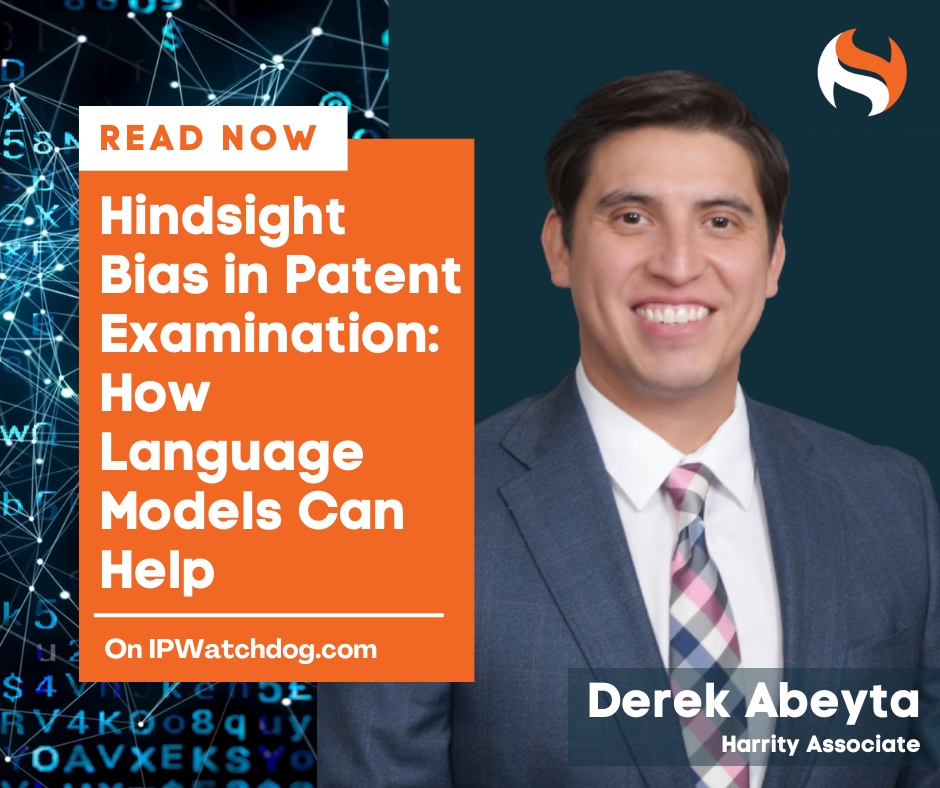
Hindsight Bias in Patent Examination: How Language Models Can Help

Derek Abeyta covers “Hindsight Bias in Patent Examination: How Language Models Can Help” in a featured article for IPWatchdog.com.

The article discusses the issue of hindsight bias in the patent examination process and proposes the use of artificial intelligence (AI) models, specifically large language models, to address this problem. Hindsight bias occurs when a patent examiner unknowingly uses their knowledge of the invention to reject a claim as obvious. This can lead to incorrect determinations of obviousness, prolong prosecution, and result in unfair narrowing of independent claims. AI models can help mitigate this bias by providing an objective and consistent standard for determining obviousness. These models can analyze the examiner’s rationale for an obviousness rejection and identify instances of impermissible hindsight, thereby assisting the examiner in providing a more reliable assessment of patentability.

“Language models have the potential to reduce the likelihood of appeals and legal challenges, streamline prosecution, and lead to more consistent and cost-effective patent examination,” Derek says.

The article also highlights the challenge of determining whether an invention would have been obvious to a person of ordinary skill at the time of filing and how to overcome this challenge, the potential benefits of using language models, and whether they outweigh the initial costs and cons.

Read the full article to learn if language models offer a promising solution to mitigate hindsight bias, improve the patent examination process, and ensure consistency and objectivity in determining patentability on IPWatchdog.com.